Anyone who enters a modern building today is surrounded by digital technology. Heating and cooling are controlled automatically, energy consumption is measured, rooms are booked digitally, access is managed electronically and technical systems are permanently monitored. In fact, this should have long since made our buildings intelligent.
In practice, things often look different. Many of these systems work very well on their own. But they operate side by side instead of together. Facility management, energy management, space utilization and maintenance each have valuable information, but a shared picture of operations is often missing. So we have not abolished the silos. We have digitized them. The separation is less visible today, but still noticeable in day-to-day operations.
A digital model alone does not make an intelligent building
This becomes particularly visible in the transition from planning to operation. After a building is completed, enormous amounts of data are now available. Models, data points and technical documentation are handed over to the operator. The handover is thus technically complete, but far from thought through in operational terms.
Because in everyday life completely different questions arise: Which rooms are actually used? Which systems have to run for that? Where are we wasting energy unnecessarily? How do we know whether an optimization has been successful? And how do we prevent failures before they occur at all? A digital building model only unfolds its real benefit when it helps to answer such operational questions and helps to identify technical faults in good time before failures occur at all. If the building automation detects a deviation in a system, a digital twin can link the notification with the technical context and automatically forward it to a ticket system. In this way, an alarm becomes a concrete work order whose responsibilities and processing status can be tracked transparently. If historical operating data is also evaluated, recurring patterns and gradual changes can be detected earlier. Maintenance thus becomes more predictive: it does not only begin once a system has already failed.
Networking alone is not enough
That is why, when we talk about intelligent buildings, we should not only talk about networking. Connecting systems with each other is important, but it is not a result in itself. Intelligent building operation has to bring data together and understand its context. Then the loop is closed: it must be checked whether the measure taken has actually had the desired effect. Without this feedback, even the best analysis remains just another look at a dashboard.
This is precisely the idea that a Building Operating System represents for me. It is not yet another software platform alongside the existing systems. Rather, it is about the ability to make all systems work together in such a way that a closed process is created: connect, understand, decide, act and learn from the result.
This also changes the way we look at digitalization. The success of a smart building should not be measured by how many data points are connected to each other or how many dashboards are available. What is decisive is whether the building achieves better results in everyday life: in terms of energy use, availability, comfort and operating costs.
Energy efficiency arises through interaction
Energy consumption makes it particularly tangible what potential is contained in this. A building does not become more efficient just because we know how much energy it consumes. Things get interesting when energy consumption, occupancy, technical systems and power supply are considered together. Different goals come together in operation: comfort, costs, CO2 reduction and flexibility. A good operating concept makes it transparent which aspect has priority in which situation.
By networking occupancy data and building technology, heating, cooling and ventilation can, for example, be controlled according to demand. Flexible loads can be adjusted when a consumption peak is on the horizon. In the event of technical faults, data from various sources can be combined to narrow down causes more quickly and react in a targeted way.
 John Ciempa / Rich Hughes/ Laurie Letreux
 John Ciempa / Rich Hughes/ Laurie Letreux
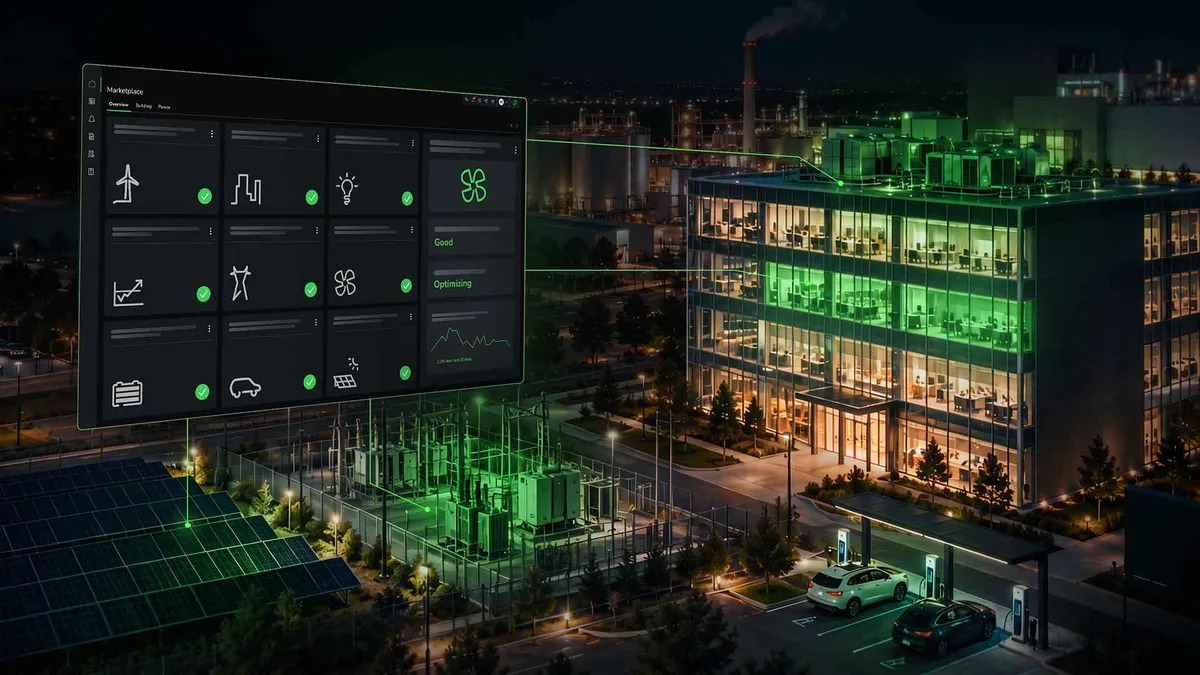
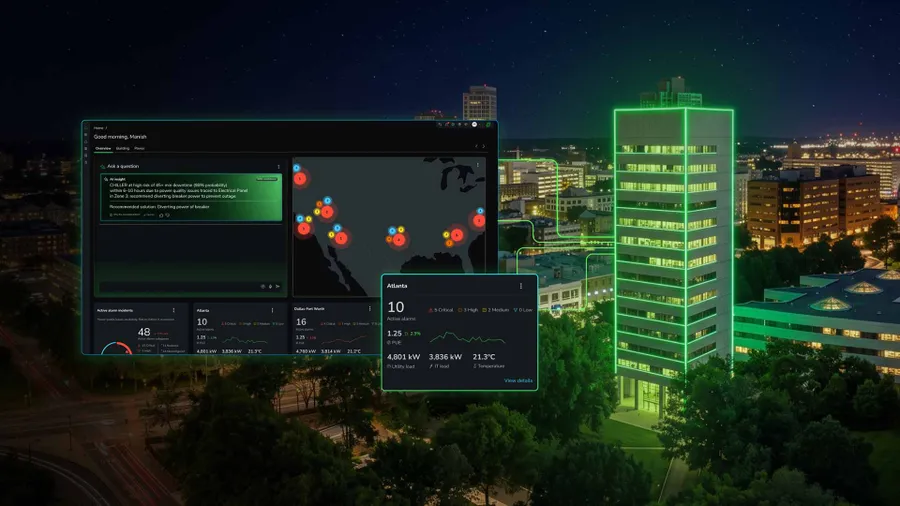
A new generation of AI-supported operations platforms such as EcoStruxure Foresight addresses precisely this gap. The platform brings together real-time information from building, energy and power supply systems in a shared operational context. AI-supported diagnostics can relate events, alarms and performance data to one another instead of displaying them as individual signals. In connection with the processes of a CAFM or IWMS system, this becomes more than a situational overview: an operational situation is recognized, the appropriate process is initiated, and it is then checked whether the measure has had the desired effect. Behind this is the principle of a closed control loop of data, context and action.
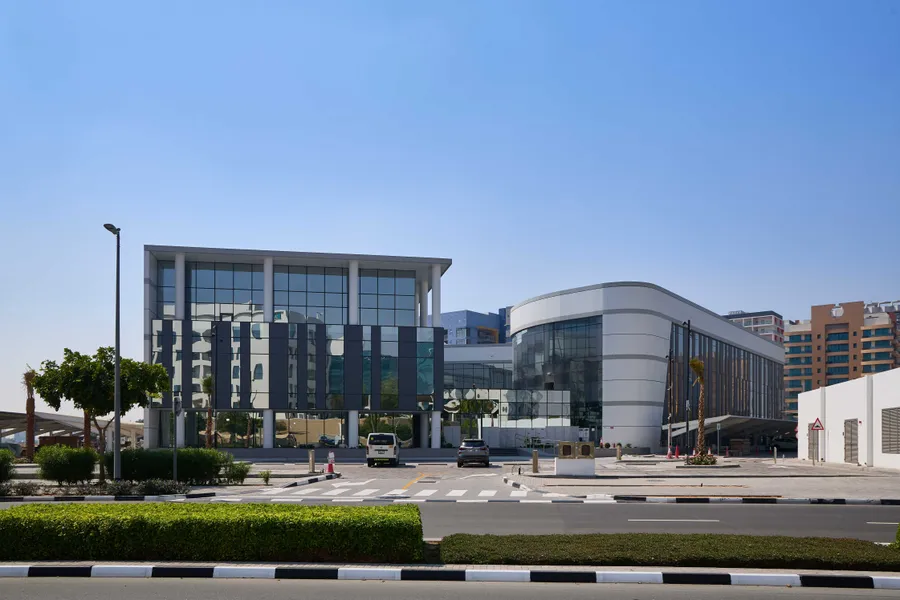
We demonstrate what this can look like in a real building at our site THE NEST in Dubai. The regional headquarters, which opens in 2025, is also a reference project for connected building operations, bringing together energy, building and workplace data. Compared to the previous location, energy consumption is to fall by 37 percent and 572 tons of CO₂ are to be saved annually. In this way, we are testing in real everyday life how integrated information can lead to better decisions for efficiency, user experience and resilient operation. It is not a single system that optimizes the building. The added value arises from the interaction and from whether there is a measurably better result at the end.
 Sharon Cronin
AI makes the next step possible
Artificial intelligence can initiate the next stage. It can analyze large volumes of data, reveal patterns and identify relationships that remain hidden when looking at individual data points. This opens up a new perspective on buildings that do not just react to events, but can detect developments at an early stage and act proactively. In the morning, only the areas that are actually needed are ramped up. Impending load peaks are detected before they occur. Conspicuous operating data can indicate maintenance needs before a fault impairs building operations. Instead of individual, unconnected alarms, this creates an overall picture that makes relationships visible and enables targeted actions.
This does not mean that buildings can or must be operated fully autonomously from one day to the next. Autonomy is not a switch, but a step-by-step development. First we see what is happening. Then we understand the relationships. This is followed by recommendations and – for clearly defined use cases – automated decisions. Not every decision belongs in the highest level of automation.
What is crucial are clear guardrails: What is a system allowed to decide on its own? When is an approval required? And who bears the responsibility? Objectives, scope for action and exceptions are still defined by humans. Especially for critical infrastructure or conflicting goals between comfort and energy consumption, this responsibility must remain visible.
No complete restart is needed
However, the path to the intelligent building does not necessarily mean replacing all existing systems. It is not about a complete restart, but about sensibly bringing together the technology that is already in place. An important consideration here is: Which decisions should this building be able to make better or earlier in the future? Initially, these might be three to five priority decisions. Building on this, it is possible to clarify which data is required, which systems need to work together, who grants approval for decisions, and how success can be measured. A meaningful acceptance test would then not only examine whether systems can exchange data, but whether the building recognizes a situation, triggers the correct response, and evidences its effect.
Operators, too, should not be involved only shortly before handover. Those who are later expected to optimize energy, comfort, availability and costs must already be able to specify during the planning phase which information and functions are actually needed in day-to-day operations.
In recent years, we have learned a great deal about how we can digitalize buildings and make data available. The next step is more demanding: from all this information, decisions must emerge that demonstrably improve operations. The most intelligent building of the future will not be the one that collects the most data, but the one that derives the right decisions from its data.