B4T: Mr. Müller, you argue that the construction industry has so far digitized the wrong layer. What exactly do you mean by “wrong layer”?
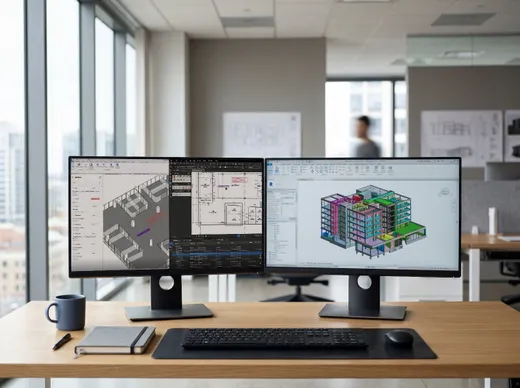
Thomas J. Müller: That was of course deliberately phrased in a provocative way. In fact, it is about a missing layer – and one of the most important ones at that. We have digitized a great deal in the construction industry. We create models, coordinate these models, have common data environments and use BIM2Field to bring planning data to the construction site. There are now standards everywhere. But the feedback loop from the construction site back into planning is not standardized; everyone does it their own way. Emails are sent, WhatsApp messages are written, photos are taken and minutes are drawn up. The information exists somewhere, but it is no longer truly located in the context between the component in the planning and the component on the construction site. It is precisely this cycle that is missing on many construction sites. We know very well what has been planned. But do we also know what has actually been built?
B4T: So that means it’s not necessarily that the information is missing, but that it doesn’t arrive at the right place?
Müller: Correct. Today we produce an enormous amount of output. But if I cannot feed this output back into the cycle, it is practically worthless. We therefore have to reverse our way of thinking and start from the result. No longer ask: What have we delivered? Instead: Have we achieved what we wanted to achieve? Was the building completed with the agreed quality, by the agreed deadline and within budget? For me, that is outcome instead of output.
B4T: How can this feedback loop be organized better?
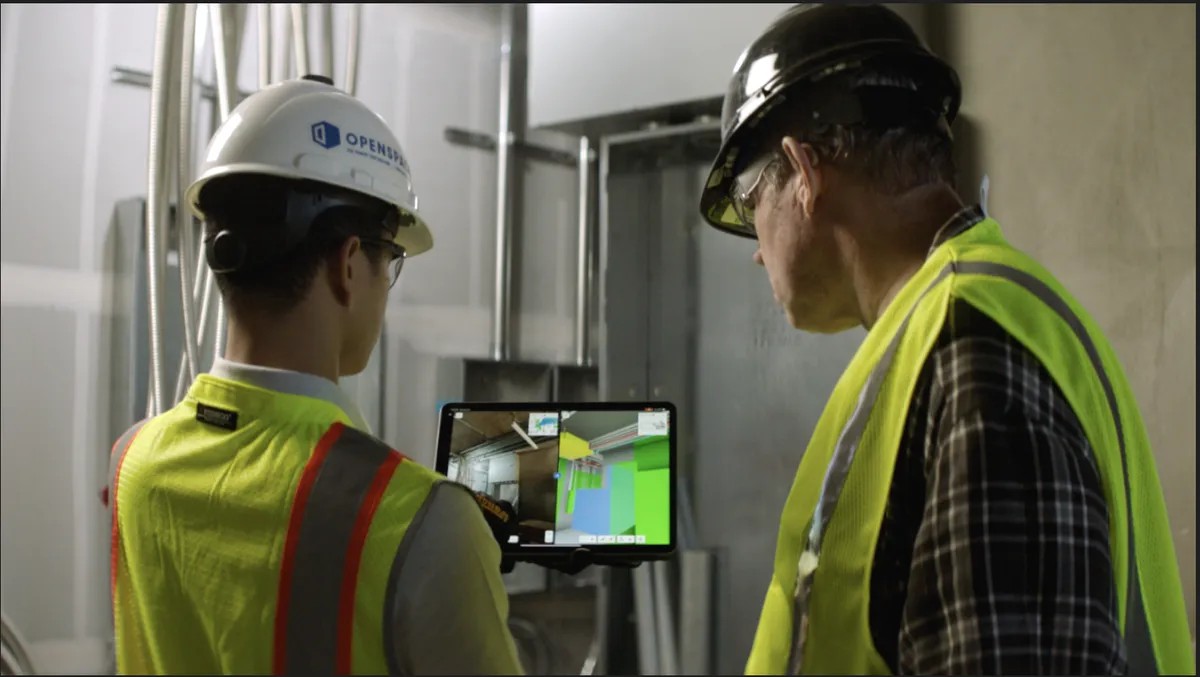
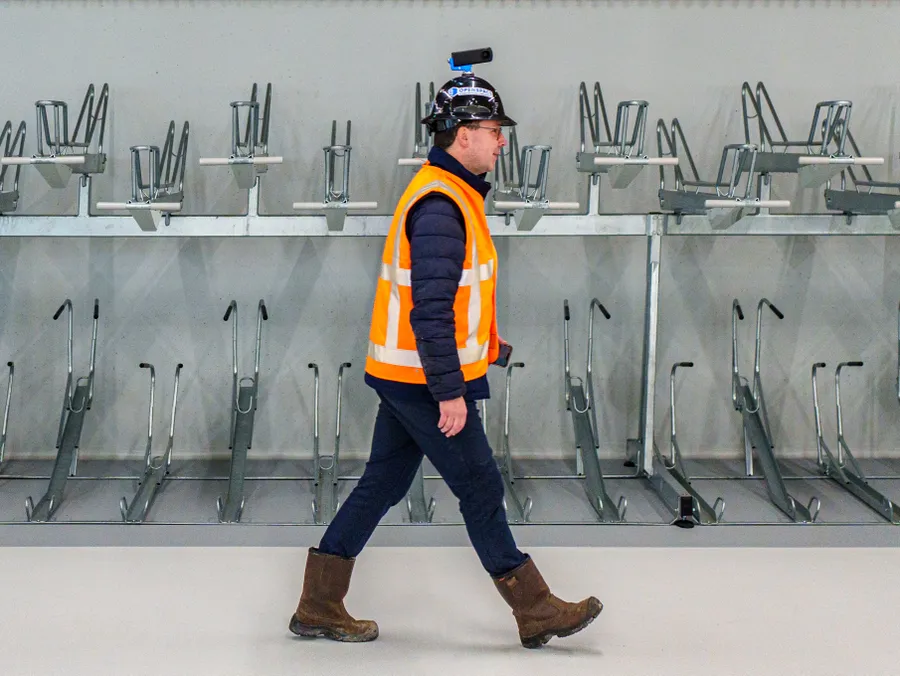
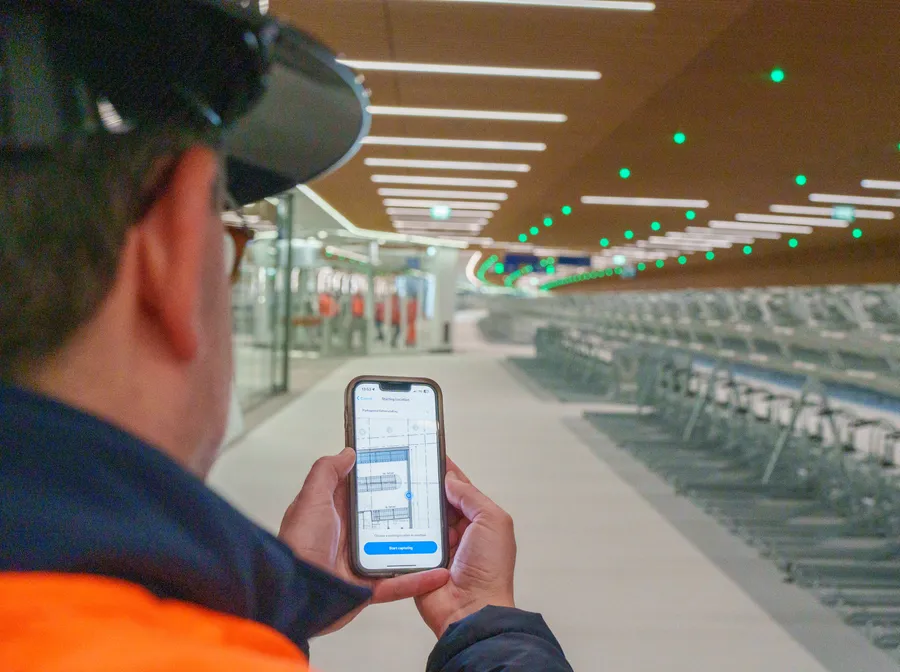
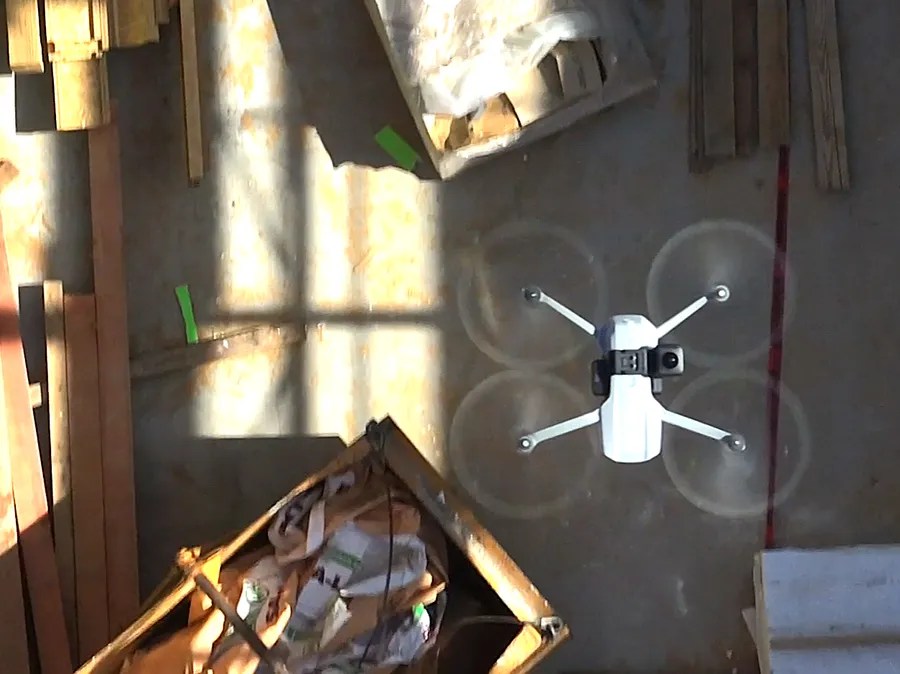
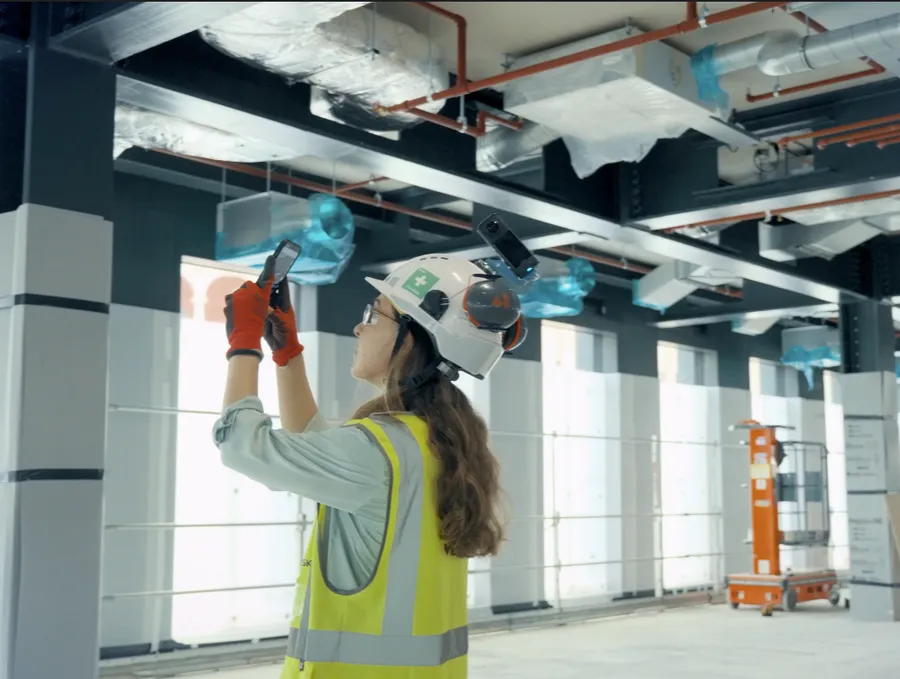
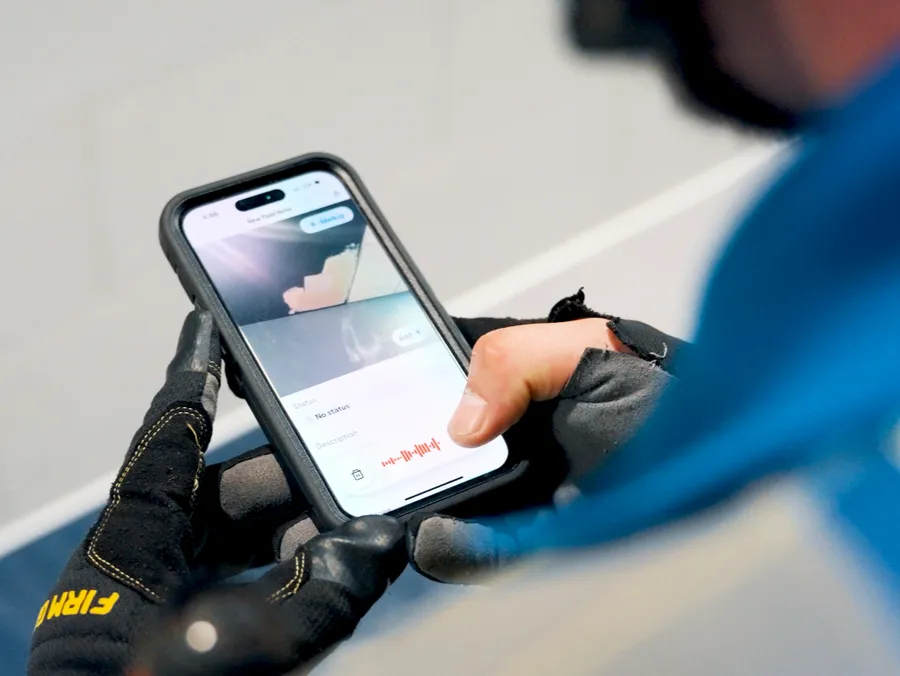
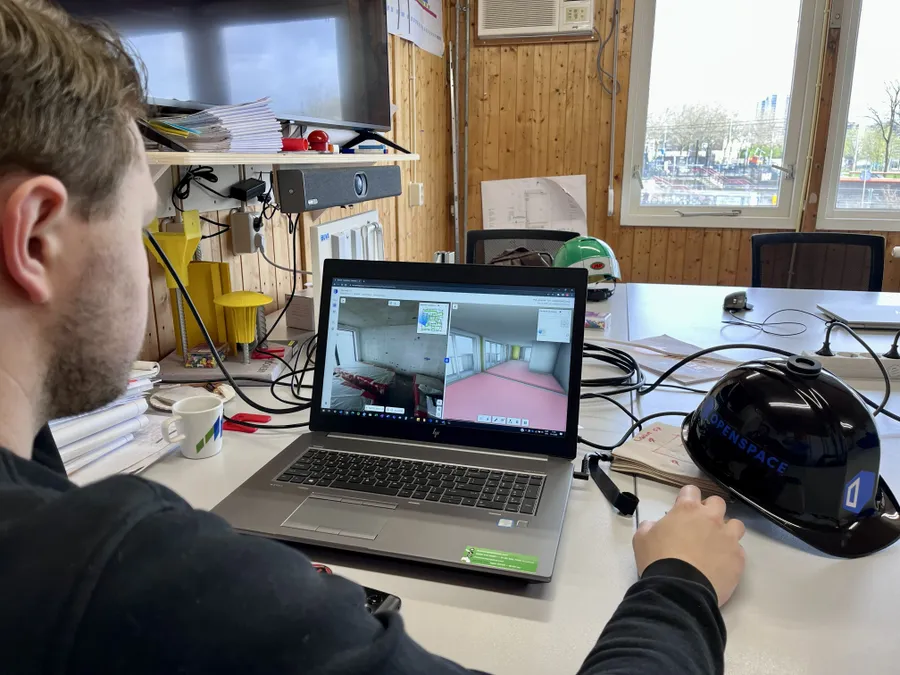
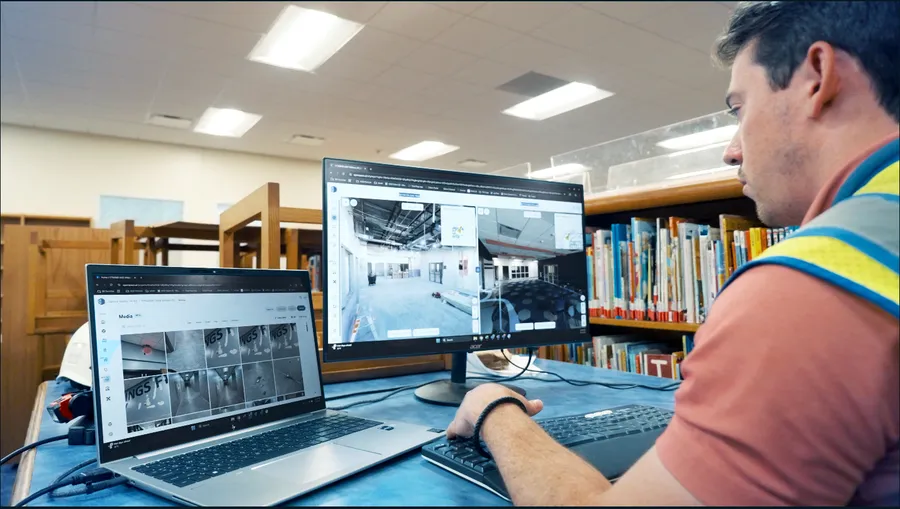
Müller: By digitally capturing the real construction site. We call this Visual Intelligence. Someone walks through the building with a 360-degree camera and records what is happening on the construction site. Technologies such as LiDAR or drones are also used. The recordings are automatically located on the floor plan. The software then knows where the image was taken, in which room and at what time. I can also upload a BIM model and then compare the model on one side with the actual image from the construction site on the other side. The crucial thing is that I don’t just have photos. I have information that is precisely assigned in space and time. I can see what something looked like two weeks ago and what it looks like today. And this information has to flow back into planning, so that the planner can react as soon as something on the construction site is executed differently than intended. This massively shortens the time between a change on the construction site and the reaction in the planning.
 OpenSpace
11 / 7
 OpenSpace
22 / 7
 OpenSpace
33 / 7
 OpenSpace
44 / 7
 OpenSpace
55 / 7
 OpenSpace
66 / 7
 OpenSpace
77 / 7
B4T: What does artificial intelligence do in this process? Can it, for example, automatically detect construction progress?
Müller: We need to specify the use of AI more precisely here. First, the camera records everything that is visible. AI can automatically locate the images on the plan and therefore also in the model. Another important use case is progress monitoring. The AI can use the images to make a preliminary classification of the performance status. However, it cannot fully assess what a particular image means for the actual degree of completion. That understanding comes from collaboration within the project team and from professional experience. That’s why our AI prepares the progress monitoring. Afterwards, our in-house architects and engineers evaluate the images in the context of the information they have received from those responsible on the construction site. So the AI provides a preliminary assessment. The professional evaluation is carried out by experts.
B4T: AI is also supposed to be used for defect inspection in the future. How does that work?
Müller: Imagine that we did a 360° capture two weeks ago and again yesterday. In between, certain defects should have been fixed so that the next trades can continue working. Today, the site manager usually has to walk through the construction site and check whether everything has really been completed. With Visual Intelligence, AI agents can automatically compare the two recording states, go through the defects identified in the first run and make a suggestion as to whether a defect has since been remedied. In doing soit provides a percentage indicating how confident it is in its assessment and also explains this assessment. From 2027, we want to make such functions available. But this is very important: AI only makes a suggestion. The decision as to whether a defect is actually closed is still made by the site manager.
B4T: Why shouldn’t the AI make these decisions independently?
Müller: Because AI must not assume responsibility on a construction site. People work for companies, and these companies ultimately have to stand by their decisions. Our approach is therefore human in the loop at all times. We want to relieve people of routine work. But in the end, the site manager has to decide. In principle, the goal of digitalization should be to create more time for people – and not for them to think less.
B4T: How reliable are such AI assessments? After all, the requirements for construction quality differ from project to project.
Müller: That is an important point. What is considered good construction quality in Cape Town, Lima, New York, Berlin or Helsinki can be very different. If you take an AI that has learned from construction sites all over the world, it will not necessarily work. At one company it might constantly detect defects that, according to the quality requirements agreed there, are not defects at all. At another, it might overlook problems because higher requirements apply there. That’s why such applications must be developed with the client and trained using their data. The AI has to learn what quality is required for the respective client and in the respective project is required.
B4T: Where does visual construction site capture reach its technical limits?
Müller: The most important limitation is quite simple: the camera only sees what is visible. If someone does not enter a room, that room will not be recorded. If they move through the construction site too quickly, the images can become blurred. Normal construction site lighting is as a rule sufficient, but of course the recording conditions have to be right. And if a wall is closed, it is also closed for our camera. Conversely, this means: If I take a 360° image before closing a ceiling, I will still know exactly later on where the pipes were laid. The same applies to electrical conduits in walls or other installations. This information is extremely valuable for later operation. That is why it is important, when introducing such a technology, to define together with the foreman when and how often recording needs to take place.
With your consent, data will be transferred to Vimeo. Privacy policy
B4T: How often does a construction site need to be captured for this information cycle to work?
Müller: That depends very much on the project. The more critical a construction site is in terms of deadlines, the more frequently it makes sense. We have customers who give every foreman or supervisor a camera. In some cases, recording is done daily. In other projects, recording is done after certain work steps. For example, in road construction, before something is backfilled or covered up. Such a work step can take three days or even two weeks. What matters is not recording as often as possible, but hitting the right points in time. And of course, many images are generated in the process. AI helps here as well. It selects, for example, the sharpest images with the best lighting conditions. All images remain available, but on the platform initially only a selection of the best images is shown.
B4T: That creates yet another data platform alongside those already available. How do the information then reliably flow back into the existing BIM and project management systems?
Müller: We have an API-first approach. We do not want to be a new silo. If I record defects, for example, I can transfer them into other systems using the international BCF standard. And via our API, companies can connect their own systems directly. These can be BIM and coordination platforms, for example from Autodesk or Revizto, but also larger enterprise applications up to and including SAP. Naturally, we can also output PDF and Excel reports. Our goal is to make reality capture and visual intelligence as simple and efficient as possible on our platform. But the information should flow back as quickly as possible to where the other project participants work.
B4T: Can detected deviations then also be automatically transferred into schedules and cost forecasts?
Müller: When we assess the work progress and determine that work, for example on a wall, should already have been carried out for eight days but the work has not yet started at all, this naturally has an impact on the subsequent trades. We can provide this information so that it can be incorporated, for example, into cost and schedule management. But we only make a suggestion. The responsible person has to decide whether to adjust their planning. I do not want the computer to start deciding everything autonomously. The technology should prepare the information so that people have more time to assess it professionally, discuss it with each other, and make the right decisions.
B4T: Let us turn tothe economic benefits. From what project size does the technology pay off at all? Am I also planning my single-family house with it?
Müller: No, I would not recommend it for a private single-family house, unless someone has plenty of money. As a rough guideline, we say that it becomes interesting from projects of roughly ten million euros. The larger and more complex a project is, the more valuable visual intelligence becomes. Take a hospital, for example. A project like that can quickly cost 500 or 700 million euros. The opening date is extremely important, because the entire logistics and perhaps also the start of operations depend on it. An error detected too latebecomes very expensive here very quickly. So you always have to compare the costs of such a technology with the costs that arise from problems being detected too late.
B4T: Are there reliable figures on how much this can reduce errors or costs?
Müller: We asked our customers how many errors they believe they were able to avoid by using our system. On average, they reported 40 percent fewer errors. It is important to note: this is purely a customer estimate. I have also looked at studies on defect costs in construction. According to the study "Defects in Building Construction" by ETH Zurich, commissioned by the Swiss Contractors' Association (SBV), these are around seven percent of the construction sum in Switzerland; in Germany, BauInfoConsult puts them at 8.1 percent in its annual analysis Germany 2023/2024. So we are talking about substantial amounts that could be saved by detecting and rectifying errors at an early stage. Because if a problem is detected immediately, the contractor may be able to go back once more and correct it. If the wall or ceiling is closed later, the same correction may become very expensive.
B4T: When I think of economic benefits, I immediately think of data utilization as well. But who owns the data that are collected during a construction project?
Müller: That depends on who is using the technology and how the collaboration is structured. If, for example, a general contractor licenses the system and records the data, then that data belongs to them. If the client uses the system, the data belong to the client accordingly. But we also often see general contractors creating the recordings for the client and handing over the entire data package to them at the end. This information has great value for the client. They receive not only documentation, but also time- and location-referenced as-built data that can later be used for building operation or for securing evidence.
B4T: Visual Intelligence could then also play an important role in Integrated Project Delivery (IPA), couldn’t it?
Müller: Yes, absolutely. In IPA, all parties are jointly responsible for the outcome. You do not just have individual contracts where each party only looks at their own performance, but work together to achieve the goal set by the client. Visual intelligence can make a significant contribution to transparency here. One example is a research and laboratory building in the Berlin area. The project is set up as an IPA project and is also using our technology. I believe that especially for large, complex projects, success will in future be measured more strongly by the joint result – in other words, outcome instead of output.
B4T: If we look a bit further into the future: What will the construction site look like in five years?
Müller: I believe that robotics will make a very substantial entry onto the construction site. We are already seeing an interesting example of this in Japan. There is a severe shortage of skilled workers, and especially for construction sites far away from cities it is becoming increasingly difficult to attract people for certain tasks. That is why work is being done to control excavators remotely. The excavator operator no longer has to sit on the construction site. From a potentially far-away office, they can operate several construction sites. The excavator thus becomes a kind of robot that is still controlled by a human. However, its surroundings then need to be recorded visually without gaps so that the operator in the office can see everything and the machine additionally warns, for example when an obstacle approaches. Robotics will also play an increasingly important role in bricklaying or plastering. And this brings us back to our topic: When machines and robots are working on the construction site, it becomes even more important that the actual on-site situation is captured digitally and that this information flows back into the planning. I believe that digital construction planning, reality capture and robotics will grow much closer together in the future. Only then will this cycle truly work.
„An error that is recognized too late becomes very expensive very quickly. You must therefore always compare the costs of such a technology with the costs that arise from problems that are detected too late.“
B4T: Let’s talk about the economic benefits. From what project size is the technology worthwhile at all? Would I also use it to plan my single-family home?
Müller: No, I wouldn’t recommend it for a private single-family home, unless someone has plenty of money. As a rough order of magnitude, we say that it becomes interesting from projects of around ten million euros. The larger and more complex a project is, the more valuable Visual Intelligence becomes. Take a hospital, for example. A project like that can quickly cost 500 or 700 million euros. The opening date is extremely important, because the entire logistics and possibly the start of operations depend on it. An error that is detected too late becomes very expensive very quickly. So you always have to compare the costs of such a technology with the costs that arise from problems being detected too late.
B4T: Are there reliable figures on how much errors or costs can be reduced as a result?
Müller: We asked our customers how many errors they felt they were able to avoid by using our system. On average, they reported 40 percent fewer errors. It is important to note: this is purely a customer assessment. I have also looked at studies on the cost of errors in construction. According to the study “Defects in Building Construction” by ETH Zurich, commissioned by the Swiss Contractors’ Association, these costs in Switzerland are around seven percent of the construction sum; in Germany, BauInfoConsult puts them at 8.1 percent in its 2023/2024 Germany annual analysis. So we are talking about substantial amounts that could be saved by identifying and correcting errors at an early stage. Because if a problem is identified immediately, the tradesperson can perhaps go back and correct it. If the wall or ceiling is closed later, the same correction may become very expensive.
B4T: When I think of economic benefits, I immediately think of data utilization as well. But who owns the data collected during a construction project?
Müller: That depends on who uses the technology and how the collaboration is structured. If, for example, a general contractor licenses the system and collects the data, then that data belongs to them. If the client uses the system, then it belongs to the client accordingly. We also often see general contractors creating the recordings for the client and handing over the entire data package to them at the end. This information is of great value to the client. They receive not only documentation, but also time- and location-specific as-built data, which they can later use for building operation or for securing evidence.
B4T: Visual Intelligence could then also play an important role in Integrated Project Delivery (IPD), couldn’t it?
Müller: Yes, absolutely. In IPD, all parties are jointly responsible for the result. You don’t just have individual contracts where everyone focuses on their own performance, but instead you work together to achieve the goal set by the client. Visual Intelligence can make a significant contribution to transparency here. One example is a research and laboratory building in the Berlin area. The project is set up as an IPD project and also uses our technology. I believe that, especially for large, complex projects, success will in future be measured much more by the shared result – in other words, outcome instead of output.
B4T: If we look a bit further into the future: what will the construction site look like in five years?
Müller: I believe that robotics will make a very significant entry onto the construction site. We can already see an interesting example in Japan. There is a major shortage of skilled workers there, and it is becoming increasingly difficult, especially for construction sites far from cities, to attract people for certain jobs. That’s why efforts are being made to control excavators remotely. The excavator operator no longer has to sit on the construction site. From an office that may be far away, they can operate several construction sites. The excavator thus becomes a kind of robot that is still controlled by a human. Its surroundings then have to be captured visually without gaps, so that the operator in the office can see everything and the machine additionally warns them if, for example, an obstacle is approaching. Robotics will also play an increasingly important role in bricklaying or plastering. And this brings us back to our topic: when machines and robots are working on the construction site, it becomes even more important to capture the actual situation on site digitally and feed this information back into planning. I believe that digital construction planning, reality capture and robotics will converge much more closely in the future. Only then will this cycle really work.