Anyone who not only wants to know what holds the world together at its core, but also whether the cohesion in structures is safe, quickly realizes one thing: For fasteners such as screws – including versions for the highest demands on safety and load-bearing capacity – there are indeed a multitude of studies, standards, and regulations for design and installation. However, what happens to them after installation during ongoing operation is often a blind spot. True transparency about the actual preloads and operating forces, and thus about the condition of the bolted joint and its surroundings, can hardly be achieved using conventional inspection methods. Classical test procedures generally deliver a binary assessment: tight or not tight.
Whether it is a sound test by striking with a hammer, controlled retightening with a torque wrench, or a purely visual inspection – at best, all three methods detect whether a screw is still seated, but not with what force. There is also a practical problem: in every case, specialists need direct physical access to the respective bolted connection. On offshore platforms on the high seas or at hard-to-reach areas of tall hall structures, this is not easily possible and is associated with high effort, safety risks, and costs.
At the same time, the buzzword “Structural Health Monitoring” (SHM) has long been on everyone’s lips in the construction sector. A wide variety of sensors, transmission technologies, and evaluation programs are installed in and on buildings, data is collected over long periods and evaluated with great effort. Bolted joints, however, have so far rarely been the focus of such monitoring concepts. One reason for this lies in the technical and financial effort: the two most common methods for direct bolt force measurement – additionally installed load cells or strain gauges bonded into a central bore in the bolt shank – are complex to install and therefore costly.
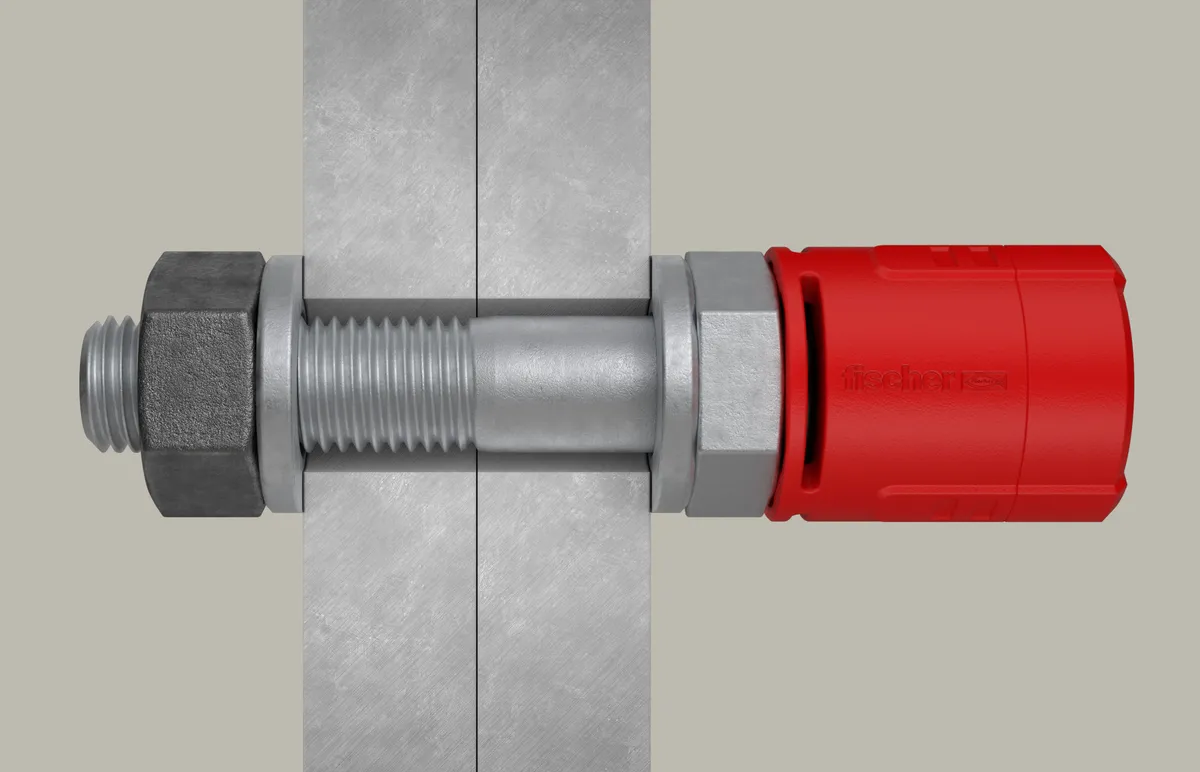
This gap is closed by cost-effective screws equipped with sensors at the factory – without any loss of strength or mechanical properties. How versatile these sensor-based fasteners can be used in practice is demonstrated by three current applications of the fischer SensorBolts.
1. Offshore converter platform DolWin alpha
 fischer
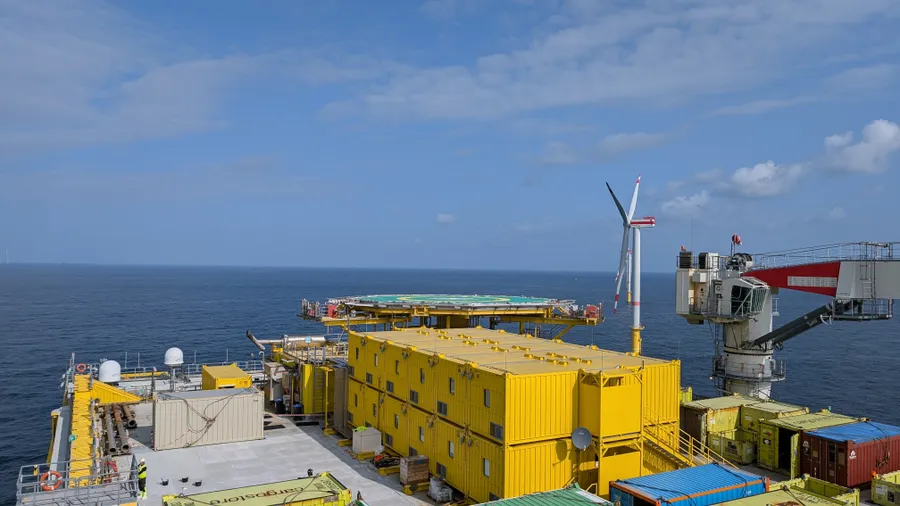
On the offshore converter platform DolWin alpha in the North Sea, the SensorBolts monitor the bolted joints beneath the helicopter landing platform, in order to reduce the intervals of labor-intensive on-site inspections and at the same time gain seamless insights into the structural condition. They were installed on the node plates of the helicopter deck at a height of 57 m – a steel-aluminum composite structure on which flange plates are fastened to aluminum girders. The challenges are the highly corrosive maritime environment, the remote location, and the strict, cost-intensive maintenance cycle which, with conventional inspection methods, requires personnel transfer and manual inspection of the bolted joints. The SensorBolts continuously measure the force with which the screws hold the components together. This makes it possible to detect whether the preload decreases during operation. The measurement data are transmitted via SensorNodes to a gateway and from there forwarded end-to-end encrypted to the cloud, where they can be accessed via a customer-specific dashboard.
The arrangement of the sensors was defined on the basis of the structure’s data. Laboratory tests had previously demonstrated that the system originally developed for high-strength bolts also works with stainless steel screws without any loss of performance. The basis for the contract was the positive experience from an initial pilot project in 2023/24, in which stainless steel screws on offshore helicopter platforms were equipped with SensorDiscs washers.
The aim now is to prove that continuous remote monitoring also functions reliably over the long term under offshore conditions. Together with a certification body, generally applicable guidelines are to be developed from this, which will in future make it possible to extend the maintenance intervals of offshore installations with the help of sensor-based screw monitoring.
2. Olympic Park Munich
 fischer
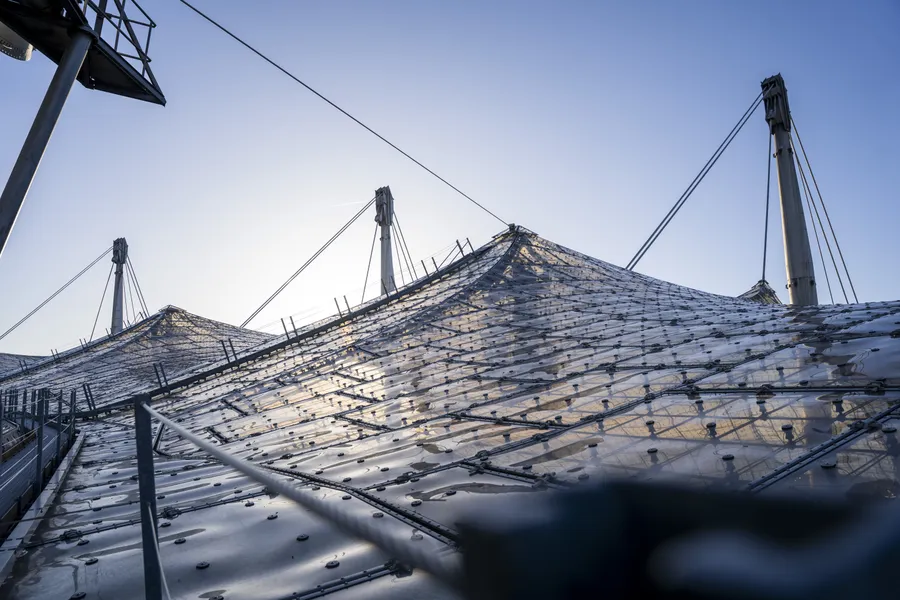
The same principle was applied in the Olympic Stadium in Munich, where existing bolted joints of the visitor platform integrated into the roof were supplemented with fischer SensorBolts. Here too, the high-strength screws continuously measure the preload force in kilonewtons via a sensor on the screw head. In steel construction, this is the decisive parameter for the clamping of the components. A second sensor records the temperature in order to take environmental influences into account.
The particular challenge lies in the high safety requirements and the difficult accessibility: at a height of 40 to 50 meters, walkways run over the filigree steel cable structure of the approximately 78,000 square meter tent roof. Visitors can walk along these during the “tent roof tours” using climbing equipment. There is also the “Flying Fox,” a zip line about 200 meters long at a height of around 35 meters above the playing field. The bolted joints here must meet the highest safety requirements. At the same time, it was previously only possible with great effort to check their preload forces over long periods and under varying loads. Continuous remote monitoring now allows more targeted maintenance planning with less downtime and lower costs, while further optimizing safety standards and extending service life.
3. Europa-Park Rust
 Europa Park
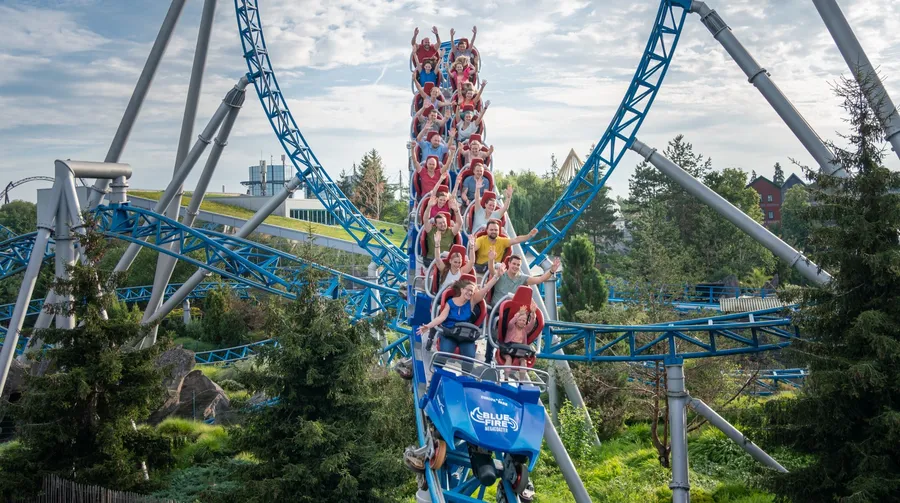
How the technology proves itself under extreme conditions is currently being tested in a pilot project at Europa-Park in Rust: On the seat consoles of the “blue fire Megacoaster” roller coaster, which are repeatedly subjected to high forces on every ride, bolted joints have been supplemented with pre-series SensorBolts in coordination with TÜV Süd. The connections are exposed to acceleration forces of up to 3.8 G – passengers feel 3.8 times their own body weight. In addition, there are permanent vibrations, strong magnetic fields from the LSM catapult drive, which accelerates the roller coaster from 0 to 100 km/h in 2.5 seconds, as well as weather influences in outdoor operation.
The pilot project emerged following a product presentation at which the possibilities of real-time monitoring were particularly convincing. If the technology proves itself in ongoing operation, it is to be used on a larger scale in the future and, through the integration of the measurement data, become a permanent part of Europa-Park’s safety concept. The goals are more targeted maintenance planning, less downtime and lower costs while maintaining a consistently high safety level.
Reality check: When is the use worthwhile?
As the projects show, sensor-based bolt monitoring is particularly useful when conventional maintenance is very time-consuming or provides only insufficient insights. Four criteria characterize typical fields of application: complex inspections, strict safety requirements, high risk and difficult accessibility.
At Europa-Park, for example, it is the high safety standards and the resulting density of inspections on the seat consoles of the “blue fire Megacoaster” that make continuous monitoring attractive. On TenneT’s DolWin alpha converter platform, it is the accessibility: on TenneT’s DolWin alpha converter platform, by contrast, difficult accessibility is at the forefront: every inspection of the helideck 57 meters above the North Sea requires personnel transfer by ship or helicopter and a manual on-site check. In Munich’s Olympic Stadium, both aspects come together: the safety-relevant bolted connections of the visitor platform are located at heights of up to 50 meters and are part of a listed cable-stayed steel structure.
SensorBolts meets Siemens Building X
On-site data collection is only the first step. Successful, holistic monitoring must cover the entire path from the measuring point to evaluation by the operator. The modular concept of the fischer SensorBolts offers various options for this: in addition to reading out the measured values on site via smartphone, the SensorNode enables permanent, automated data transmission via the energy-efficient LoRaWAN radio network – around the clock, without anyone having to visit the measuring point. A web-based cloud solution is available for visualizing and managing the data, which automatically notifies operators when thresholds are exceeded.
For larger projects, a higher-level, open building platform is recommended that brings together building and measurement data across trades. The cloud-based smart building suite Siemens Building X offers a wide range of applications and services for this, up to and including a digital twin of building operations. The measurement data from the fischer SensorBolts can be integrated directly here.
 Siemens AG 2026
 Siemens AG 2026
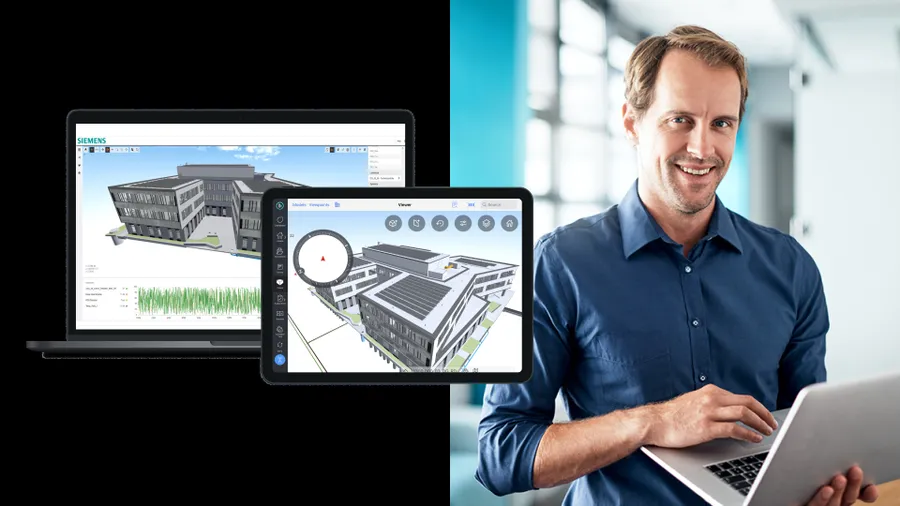
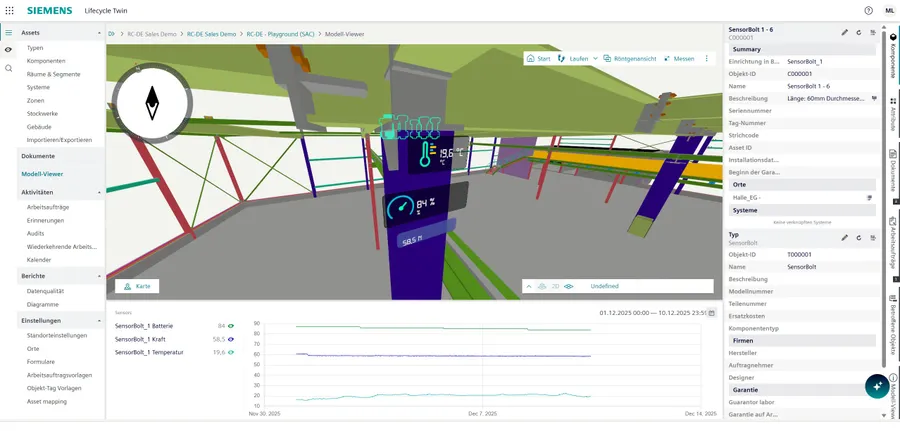
How this works in practice is demonstrated by an installation in a production hall of the fischer group of companies: a seamless system was created there from the fastening point through to digital building operation. Every monitored bolt becomes an active data point in the digital twin. The binary snapshot of conventional test methods with the statement “tight or not tight” becomes a continuous data stream. And what was previously just a tool for fastening becomes an active data point in the digital twin of the building.
In Building X, the measured values are visualized on three levels: first, the platform shows the overall condition of all monitored fastening points at a glance. In addition, each sensor can be queried individually, including the time history of pretensioning force, temperature and battery status. In the Lifecycle Twin’s 2D/3D viewer, the sensors also appear in the building context: linked with the BIM model and asset master data, every measured value is spatially located and traceable over time.
Building X thus functions as an early-warning system: changes in condition and threshold violations are reported automatically, without the operator having to regularly check the dashboard. An error lifecycle management documents each step from the detection and assessment through to the correction of an anomaly. Because the platform analyzes trends over longer periods of time, the shift from reactive to predictive maintenance becomes possible: maintenance is no longer carried out when something has failed or the calendar dictates it, but when the data suggests it. Unplanned downtime decreases, operational safety increases.
The sensor data unfolds its full value in combination with other building data – from weather and energy consumption to building management systems and maintenance information. In Siemens Building X, the measured values are linked to the respective component and system data. Standards such as COBie help to structure this information uniformly and make it usable for different applications. This creates a shared data basis for monitoring and optimizing building operations.
The data flow from the sensor via LoRaWAN and the Connect Box (MQTT) into the cloud is consistently secured and can be expanded to include additional sensor solutions. As software-as-a-service with low monthly costs, the solution is suitable both for pilot projects and for rollout across multiple locations.
Effort: conventional inspection versus sensor-based monitoring
The calculation behind this is simple: conventional inspections regularly require personnel, access equipment and, if necessary, temporary shutdown of the system. In addition, the results describe only the condition at the time of the inspection. Sensor-based monitoring, on the other hand, delivers data continuously, without anyone having to be on site. In the long term, this makes it possible to extend inspection intervals based on data and reduce unplanned shutdowns, because irregularities are detected before they become a problem.
The hurdle is not the technology
The fact that sensor-based inspection is still the exception today is due less to the technology than to the regulations. Maintenance and inspection procedures are laid down in standards and guidelines – and these have so far not recognized the sensor on the screw. Anyone who wants to establish monitoring as a supplement to or even a replacement for conventional inspections is currently doing pioneering work. The challenges are therefore primarily regulatory and organizational in nature. This is precisely why the first fischer project successes are of particular importance. They create the data basis that is necessary for recognition by certification bodies and standardization committees, and they have a radiating effect throughout the industry.
Gaining insights through parallel operation
In many of the current projects, conventional and sensor-based inspection therefore deliberately run in parallel. Irregularities identified during conventional maintenance can be correlated with the recorded preload force curve. This makes it possible to gradually investigate which changes in the measurement data indicate potential damage. In the long term, this could lead to more reliable early detection.
The aim of long-term monitoring is not only to determine that a bolted connection fails, but to understand why. The question "tight or not tight?" thus becomes the question "how is this connection developing – and what does that tell us about the structure?".