Every design begins with an idea that can be written on a Post-it note. This is how Alfonso Monedero describes the creative process at Heatherwick Studio. If an idea can be captured in such a simple and concise way, then it is clear and powerful enough to shape an entire design. Monedero, an architect and BIM specialist, leads Digital Practice at the London-based architecture and design studio. His description reflects a principle that also guides the studio's approach to digital planning: not every project requires the same BIM strategy. Nor does every project require the highest level of digital maturity.
The studio works on projects of vastly different scales around the world, ranging from everyday objects to entire urban districts. A standardised BIM process would hardly do justice to such diversity. Rather than starting a project by asking which level of digital maturity to achieve, the studio first considers what the project actually requires. Four factors are crucial.
Firstly, location influences the applicable standards and working practices. Project partners are equally important: do all the consultants work with BIM models, or do some disciplines still rely on conventional drawings? The complexity of the project and the scope of services being provided are also important considerations. A multinational technology company developing a highly complex campus requires a different coordination approach to a client commissioning architectural design services alone.
Three further questions need to be answered at the outset. What information must the models contain at each design stage? Which tasks should BIM support – design review, coordination, cost estimation or digital fabrication, for example? And how should geometry, component data and documentation evolve as the project progresses?
Heatherwick's approach challenges a widely held assumption in the BIM debate: that greater digital maturity is a measure of better design processes and collaboration. According to this view, progress follows a path from two-dimensional CAD drawings, through the exchange of digital models, to all project stakeholders ultimately working together in a connected data environment. The higher the level, the better the BIM process — or so the thinking goes. This understanding has been shaped by former UK BIM Levels 0 to 3, and the more detailed information management processes subsequently introduced under ISO 19650.
However, for Monedero, this view is too simplistic. A higher level of BIM maturity does not automatically result in a better building. What matters is whether the methods used actually serve the project's objectives. For its own work, the studio therefore distinguishes between four simplified levels:
- Level 0: Project participants work with two-dimensional CAD drawings and exchange 2D information.
- Level 1: The design studio works with BIM models internally but only delivers two-dimensional drawings to other project participants.
- Level 2: Project teams develop their own digital models and exchange them for coordination purposes or at defined project milestones.
- Level 3: All project partners work in a shared digital environment, using continuously updated models and data.
These levels describe the studio's working methods rather than an official BIM maturity classification under ISO 19650.
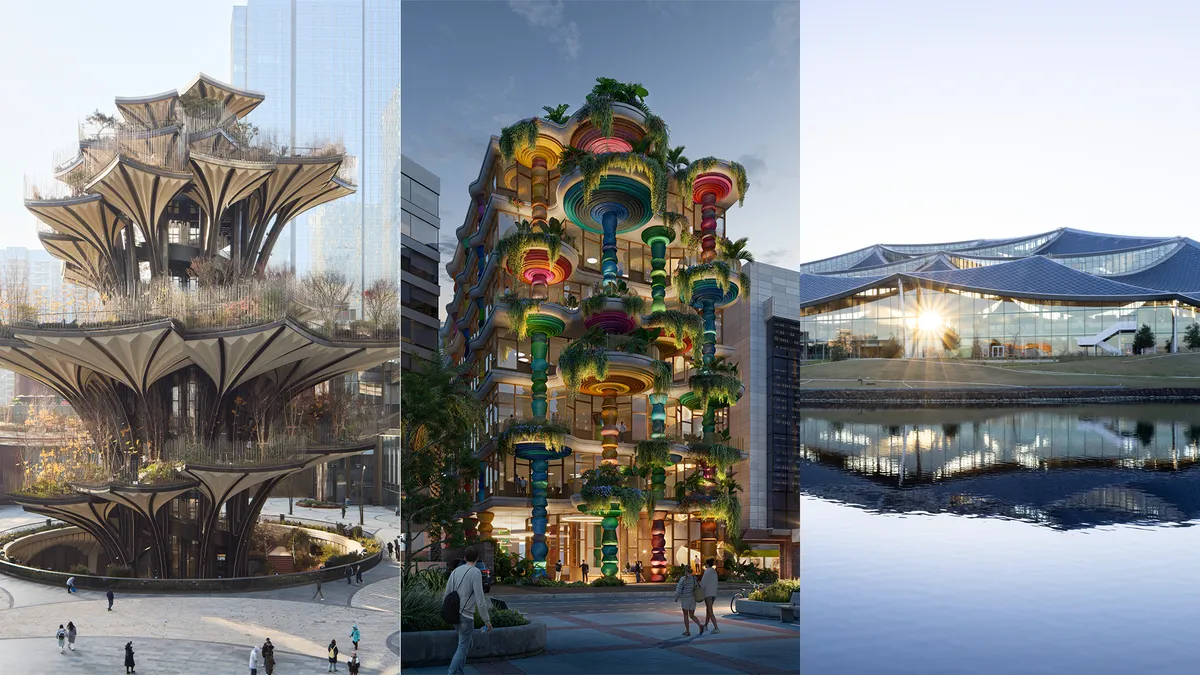
“We never defined Level 3 as being better than Level 2,” Monedero explains. “The essential distinction lies in the information that needs to be exchanged between project participants, and in how closely their work must be coordinated.” Three projects illustrate how these different BIM strategies work in practice.
 Heatherwick Studio
Xi_an_CCBD_21 / 6
 Heatherwick Studio
Xi_an_CCBD_32 / 6
 Heatherwick Studio
Xi_an_CCBD_43 / 6
 Heatherwick Studio
Xi_an_CCBD_54 / 6
 Heatherwick Studio
Xi_an_CCBD5 / 6
 Heatherwick Studio
Xi_an_CCBD_66 / 6
 Heatherwick Studio
 Heatherwick Studio
 Heatherwick Studio
 Heatherwick Studio
 Google Bay View1 / 4
 Heatherwick Studio
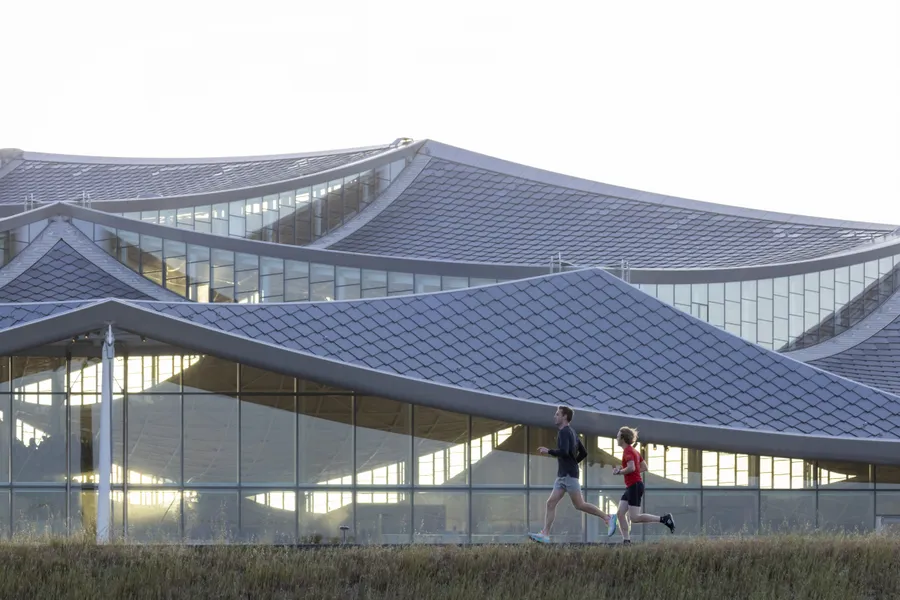
google_bay_view_22 / 4
 Heatherwick Studio
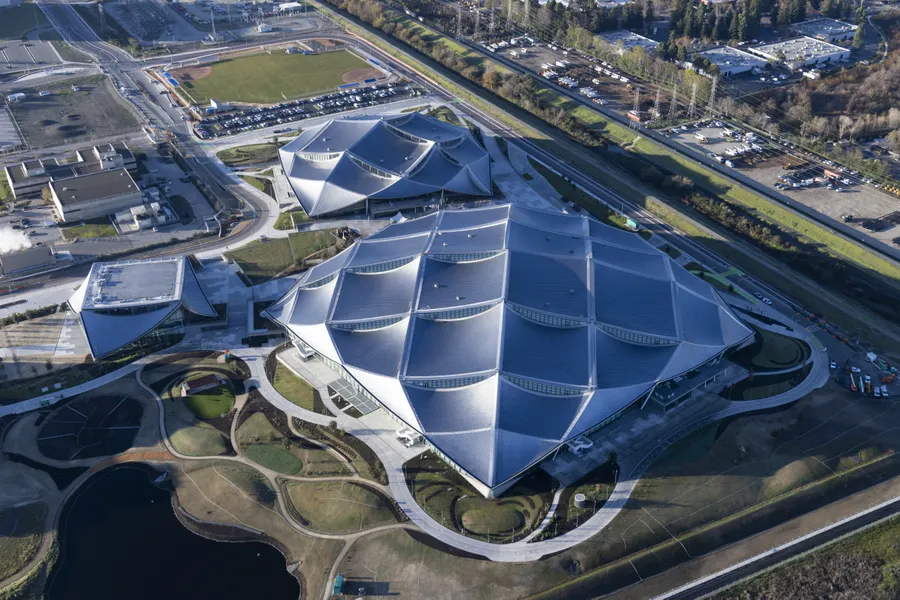
google_bay_view_33 / 4
 Heatherwick Studio
google_bay_view_44 / 4
The right level of BIM is not an end in itself
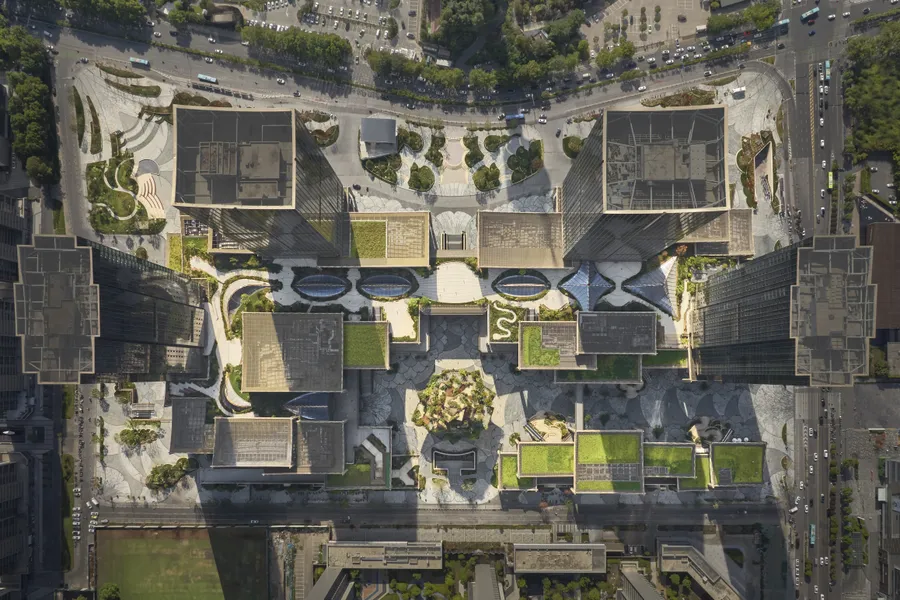
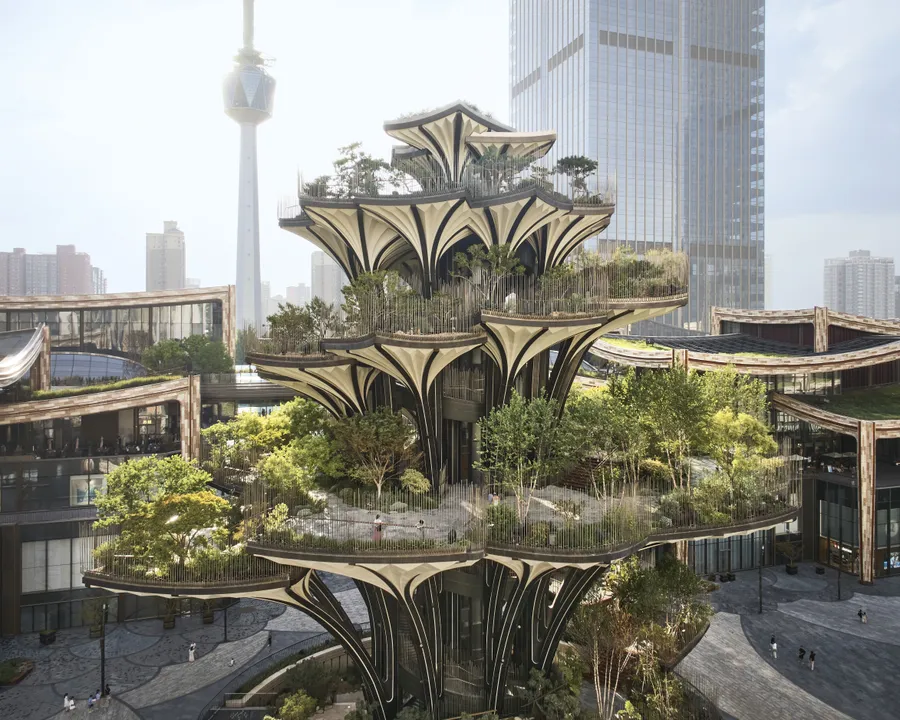
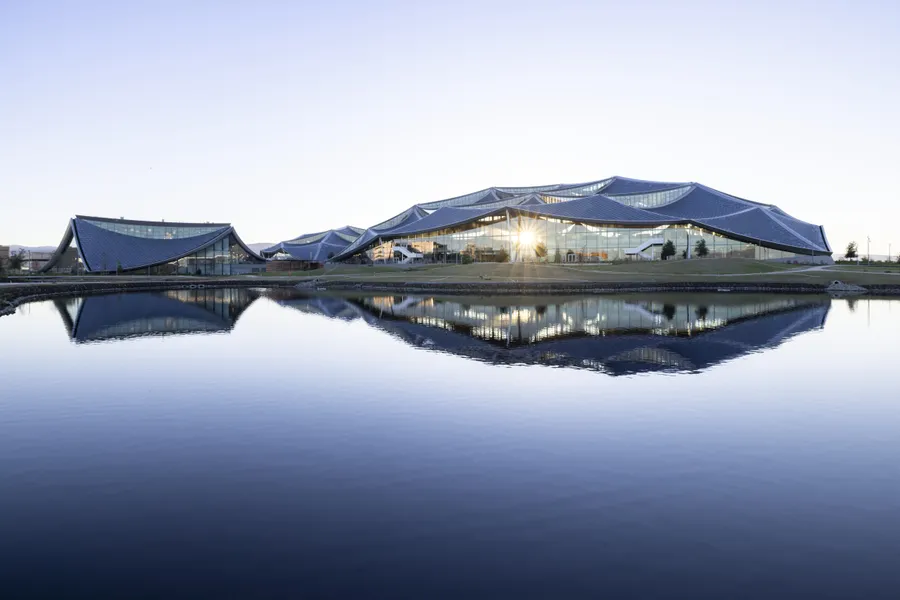
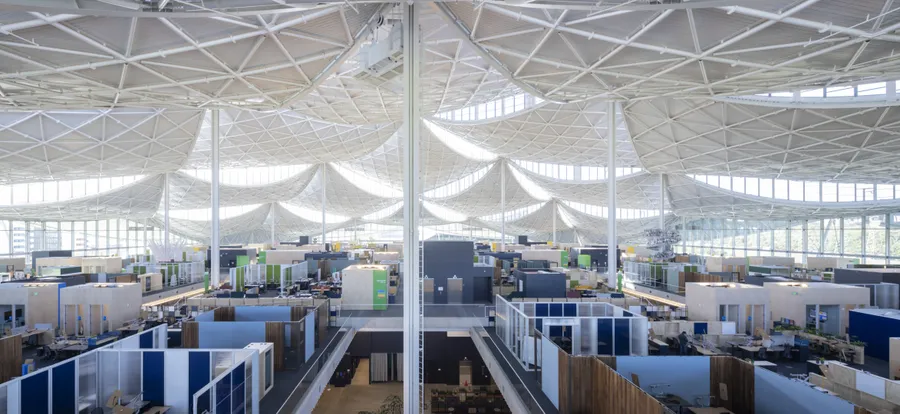
Three cities, three very different construction projects – and three approaches to digital design. What they have in common is that the BIM process was determined by the specific requirements of each project. The priority in Xi'an was to translate complex model data into drawings reliably and accurately. In Bogotá, the focus was on making design data available for other project partners to develop further. And at Google Bay View, a shared modelling environment was necessary to enable numerous disciplines to work in parallel.
While these case studies do not prove that BIM maturity has no influence on building quality, they demonstrate that exceptional architecture can be achieved using a variety of digital approaches. For the BIM industry, the implication is clear: rather than striving to achieve the highest possible level of digital maturity, the objective should be to establish a working method that genuinely meets the needs and objectives of each individual project.
This takes us back to the idea on the Post-it note: a method's quality is not determined by its complexity, but by how well it solves the problem it was designed to address.